
Matcha continues to grow as part of modern lifestyle culture, especially among Gen Z, café enthusiasts, and those seeking healthier drink options. However, one thing that often confuses buyers is the extremely wide price range. There are inexpensive matcha products that are very affordable, and there are premium matcha varieties that cost several times more. This price difference is not just a marketing gimmick. As a team of tea specialists and F&B consultants, we’ve seen firsthand how matcha quality is shaped by highly detailed processes from cultivation to grinding.
This article provides a complete overview of what truly differentiates cheap matcha from expensive matcha, and how you can choose the right matcha based on your needs and budget.
1. Color: The Fastest Quality Indicator
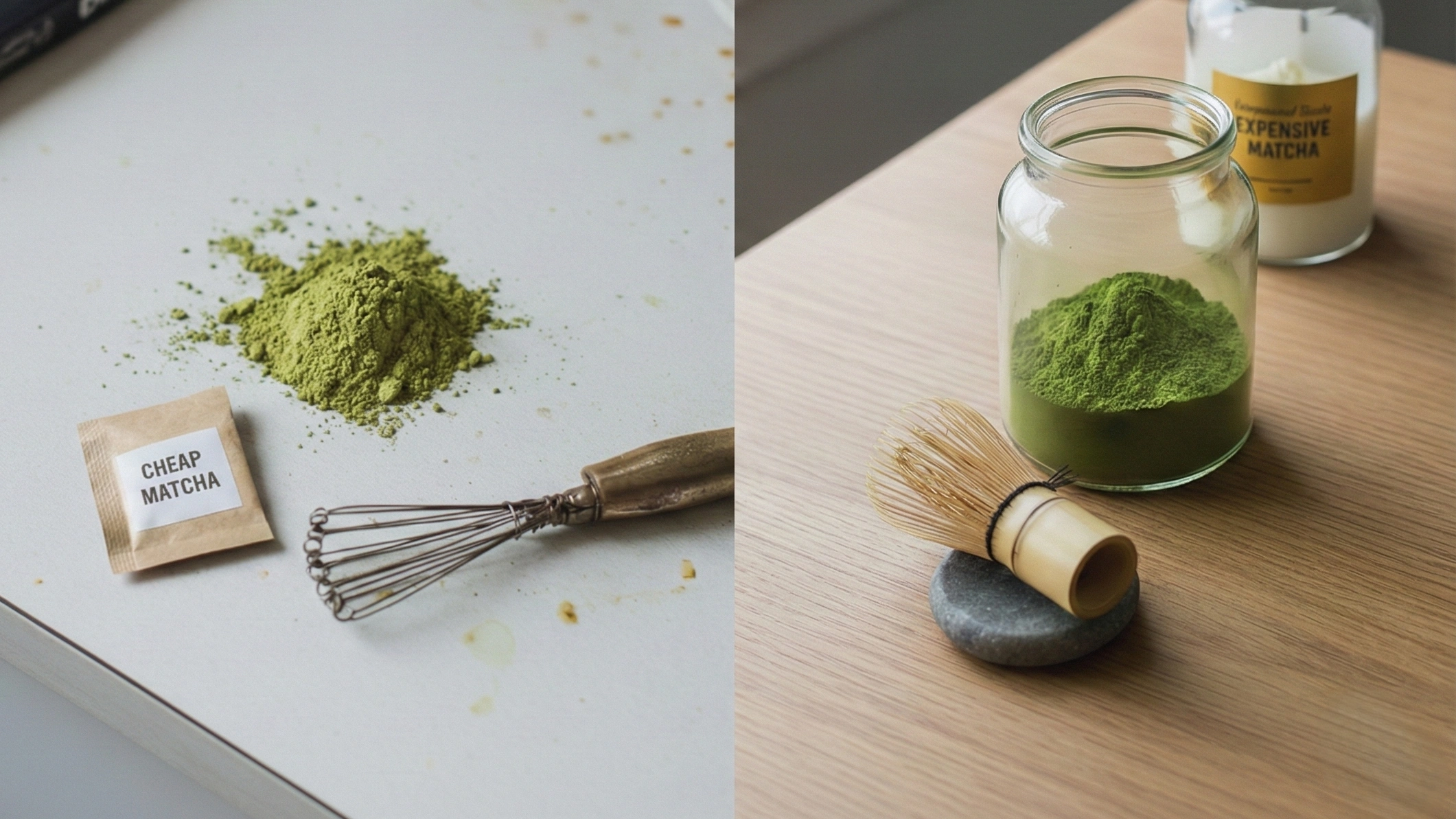
Color is the first thing you notice and one of the easiest ways to judge matcha quality. High-quality matcha typically has a bright emerald-green color. This vibrant hue comes from young first-harvest leaves rich in chlorophyll, grown under shading for 20 to 30 days before harvest. Shading enhances color intensity and reduces bitterness.
Cheap matcha often appears dull green, yellowish, or brownish. This usually indicates older leaves, insufficient shading, or oxidation caused by high-speed grinding. The duller the color, the lower the leaf quality.
2. Aroma: Fresh vs Musty
Aroma plays a major role in shaping the drinking experience. Premium matcha has a fresh, soft, slightly sweet scent that feels calming a sign of high L-theanine content from young leaves. This aroma is preserved through slow granite stone milling, which protects the leaf’s natural fragrance.
Cheap matcha tends to smell earthy, heavy, grassy, or even musty. Older leaves and stems contribute to this unpleasant aroma. Industrial high-speed grinders also generate heat that destroys natural fragrances.
3. Taste: Smooth Umami vs Harsh Bitterness
Taste is the clearest difference between low-quality and premium matcha. High-quality matcha delivers smooth umami, natural mild sweetness, and no sharp bitterness on the finish. This comes from high L-theanine and lower bitter catechins in young leaves. Cheaper matcha usually tastes bitter, sharp, and lacks complexity. Because older leaves are used, catechins that create bitterness become dominant. This type of matcha works better in lattes or sweet drinks, where milk or sugar masks the harshness.
4. Texture: Ultra Fine vs Grainy
Premium matcha has an ultra-fine texture almost like baby powder thanks to slow stone milling that minimizes heat and protects the leaf structure. It dissolves easily, creating a smooth, clump-free drink. Cheap matcha feels coarse and clumps quickly. Industrial grinding produces heat that damages the leaves, resulting in larger particles. These coarse grains often settle at the bottom of the cup, reducing drinking comfort.
5. Nutrition: High L-Theanine vs Harsh Caffeine
Premium matcha contains higher levels of L-theanine, which promotes relaxation, focus, and calm energy without jitters. Young leaves harvested in the first flush have the ideal balance of L-theanine and caffeine. Cheap matcha generally contains less L-theanine and more harsh caffeine from older leaves. This can lead to stronger, jittery effects rather than the calm alertness associated with high-quality matcha.
6. Origin and Production Transparency
Premium matcha typically comes from well-known Japanese regions such as Uji, Nishio, Shizuoka, and Kagoshima—areas with strict cultivation and production standards. High-quality brands are transparent about farm origins, shading duration, harvesting methods, and milling techniques. Cheap matcha often lacks clear origin information. While not all non-Japanese matcha is low quality, the lack of transparency makes it difficult for consumers to evaluate safety and authenticity.
7. Matcha Grades: Understanding Their Functions
Understanding matcha grades helps you decide when you need premium matcha and when cheaper options are sufficient. Ceremonial grade is the highest quality, made specifically for drinking straight without additives. It offers delicate umami and complex aroma. Premium grade sits in the middle versatile for both lattes and direct drinking. Culinary grade has a stronger taste and lower price, ideal for desserts and mixed recipes. Choosing the correct grade ensures you don’t overpay for ceremonial matcha when you only need latte grade, or mistakenly expect ceremonial flavor from culinary matcha.
also read: 7 Facts Why Is Gen Z Obsessed With Matcha
8. Practical Ways to Judge Matcha Quality
There are several quick ways to assess matcha before buying. First, check the color good matcha is bright green. Next, smell the aroma it should be fresh and soft, not earthy or grassy. Texture matters too; premium matcha should feel fine and silky. Also consider the product’s origin Japanese matcha tends to deliver more consistent quality. Finally, evaluate the price. Authentic ceremonial grade cannot be extremely cheap. If the price seems too low for its claimed grade, it likely isn’t genuine ceremonial matcha.
9. When to Choose Expensive Matcha vs Cheap Matcha
If your goal is to enjoy pure matcha with a smooth, complex flavor profile, premium matcha is the best choice. However, if you plan to mix matcha with milk, sugar, or use it in baking, cheaper matcha is sufficient. In fact, culinary grade often performs better in recipes because of its stronger flavor. Matcha selection should be based on purpose rather than price. Each grade serves a different role.
10. Tips for Beginners Choosing Matcha
For beginners, premium grade is the ideal starting point. It’s more affordable than ceremonial grade yet still provides satisfying flavor and aroma. Look at the color, read user reviews, and prioritize brands with transparent production details. High-quality matcha usually comes from brands that clearly disclose leaf origins and processing methods. Starting with premium grade helps you understand matcha’s true character before upgrading to ceremonial or switching to culinary.
Conclusion
The difference between cheap and expensive matcha goes far beyond price. Detailed processes from cultivation and harvesting to grinding and storage shape the final quality. Premium matcha offers smoother flavor, fresher aroma, finer texture, and better nutritional benefits. Cheaper matcha still has its place, especially for lattes, desserts, and recipes. The key is understanding your purpose and choosing the right grade to enjoy the best matcha experience without overspending.
If you want to experience truly fresh, vibrant, and smooth premium matcha, explore the curated selection at Ryokudo. Our collection includes ceremonial, premium, and latte-grade matcha made from carefully selected high-quality leaves. Discover the right matcha for your needs at Matcha by Ryokudo.